Perseverance Rover Captures Stunning 360-Degree Panorama of Ancient Martian Terrain 'Crocodile Bridge'
NASA's Perseverance rover has delivered a breathtaking 360-degree panorama of a region nicknamed 'Crocodile Bridge' on the rim of Jezero Crater, offering an unprecedented window into the Red Planet's ancient past. The mosaic, composed of 980 images taken in December 2025 and January 2026, reveals some of the oldest rocks in the solar system—remnants of a time when Mars' crust and atmosphere were still forming.
'Crocodile Bridge represents a gateway to rocks that hold clues to Mars' early history, a period we can't study on Earth because our planet's tectonic plates constantly recycle the surface,' said Dr. Ken Farley, project scientist for the Perseverance mission at NASA's Jet Propulsion Laboratory.
Background
Jezero Crater's rim and surrounding highlands preserve terrain that is billions of years old. Unlike Earth, Mars lacks tectonic plates, allowing ancient material to remain intact. The 'Crocodile Bridge' area marks the transition into a region scientists call 'Lac de Charmes,' which Perseverance will explore over several months later this year.
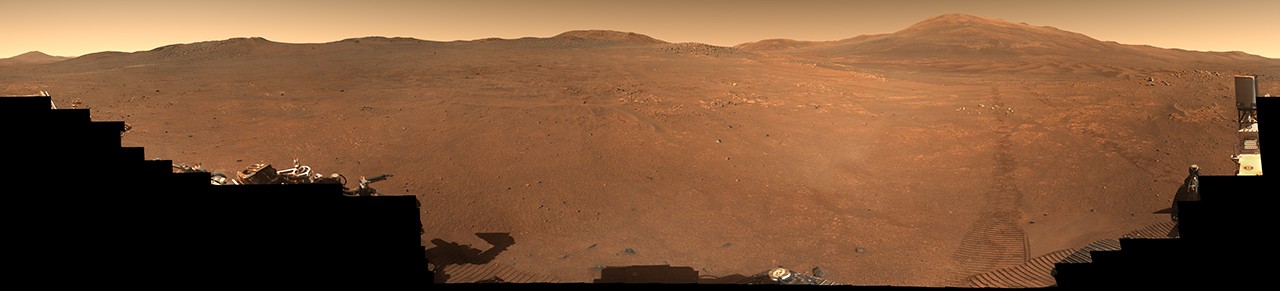
The panorama was captured using the rover's Mastcam-Z camera system. Natural-color processing shows the landscape as the human eye would see it, while enhanced-color and 3D anaglyph versions reveal subtle geological details.
What This Means
The 'Crocodile Bridge' panorama is more than a stunning image—it is a scientific treasure map. The rocks here are time capsules from the Noachian period, over 3.5 billion years ago, when Mars had a thicker atmosphere and liquid water on its surface. By studying these rocks, scientists hope to determine whether Mars ever hosted life and understand how terrestrial planets evolve.
'Each image gives us a front-row seat to Martian history,' said Dr. Farley. 'The team is eager to drill samples from these ancient formations for future return to Earth.' The rover's ongoing traverse into Lac de Charmes will focus on layered sediments and potential biosignatures.
Perseverance has been exploring Jezero Crater since landing in February 2021. Its mission includes searching for signs of ancient microbial life, collecting rock samples, and testing technologies for future human exploration. The 'Crocodile Bridge' survey adds a critical chapter to that story.
For more details, visit NASA's Perseverance mission page.
Related Articles
- Breakthrough: Blocking Key Protein Restores Memory in Alzheimer's Mice
- Study: AI Chatbots Deliberately Slow Responses to Boost User Trust
- How Astronomers Use a Rare Gravitationally Lensed Supernova to Measure the Universe's Expansion Rate
- The Great Silence: Unraveling the Fermi Paradox and the Great Filter Theory
- 6 Fascinating Science Discoveries You Might Have Missed This Month
- Unlocking Early Depression Detection: A Guide to the Monocyte Aging Blood Test
- Astronomers Uncover 10,000 New Exoplanet Candidates, Potentially Tripling Known Alien Worlds
- Fast16: The Secret US-Made Malware That Silently Sabotaged Iranian Systems