Only 5% of AI Engineering Pilots Succeed, Expert Warns — ‘GenAI Divide’ Threatens ROI
Breaking: Majority of AI-Assisted Engineering Initiatives Fail, New Analysis Reveals
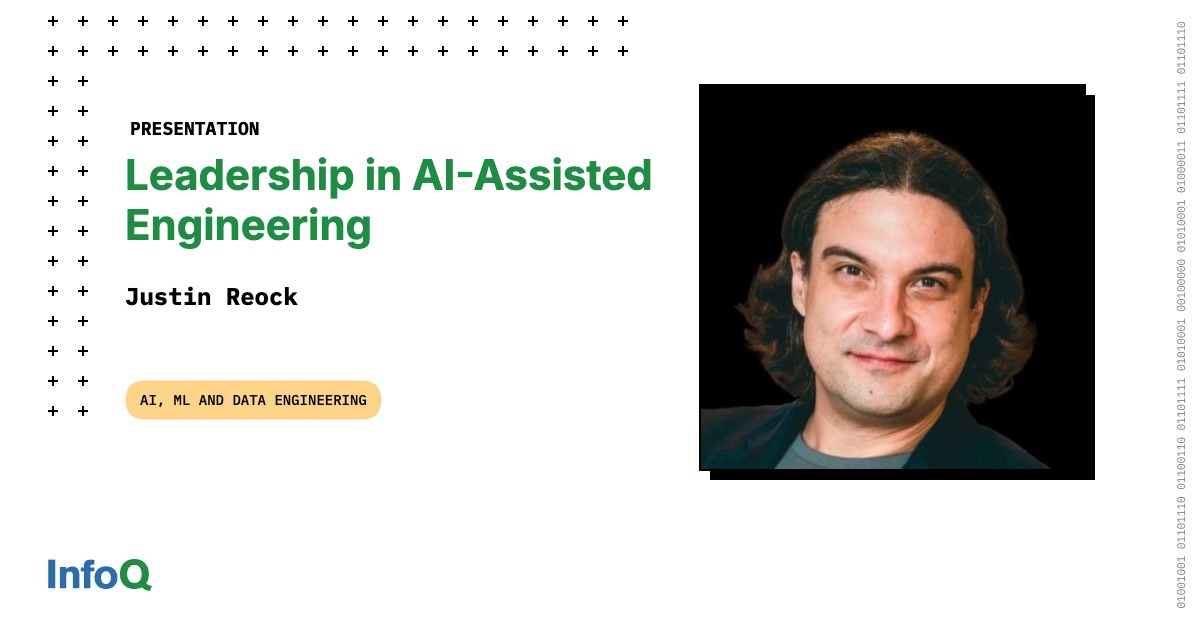
A sweeping analysis of engineering teams using generative AI reveals a startling gap between promise and performance. Only 5% of AI pilot programs in software development succeed, according to data drawn from DORA and DX research presented by industry analyst Justin Reock.

This phenomenon, termed the “GenAI Divide”, describes the chasm between early excitement and sustainable results. “The vast majority of teams jump into AI without a way to measure real impact,” Reock told attendees. “They end up with wasted investment and frustrated developers.”
The GenAI Divide: Measuring What Matters
Reock urged leaders to move past anecdotal success stories and adopt rigorous frameworks. He highlighted the SPACE framework (Satisfaction, Performance, Activity, Communication, Efficiency) and the Core 4 metrics—deployment frequency, lead time, mean time to recovery, and change failure rate—to quantify AI’s contribution.
“Without these tools, you’re flying blind,” Reock said. “The data shows that teams using structured measurement are 3x more likely to see positive ROI from AI tools.”
Background: The Promise vs. Reality of AI in Engineering
Over the past two years, generative AI tools like GitHub Copilot and ChatGPT have been hailed as transformative for code writing. However, early enthusiasm has given way to concerns about code quality, security, and developer confidence. The DORA and DX research cited by Reock aggregates data from thousands of engineering organizations, revealing a consistent pattern: most pilots stall at the proof-of-concept stage.
“The industry is at a crossroads,” Reock explained. “Leaders either embrace measurement and targeted deployment, or they watch their AI investments fizzle out.”
What This Means: Leaders Must Reshape Their Strategy
For engineering executives, the implications are clear: adopting AI is not a panacea. Success requires balancing speed with quality. Reock emphasized that reducing developer fear is equally critical—if teams feel that AI will replace their judgment, adoption will stall. The solution lies in agentic solutions that assist across the entire software development lifecycle, not just code generation.
“The leaders who win will be those who treat AI as an amplifier of human skill, not a replacement,” Reock concluded. “They’ll use frameworks like SPACE and Core 4 to prove ROI and build trust.”
Practical Steps for Engineering Leaders
- Adopt structured metrics: Use the SPACE and Core 4 frameworks immediately to evaluate pilot programs.
- Target specific SDLC phases: Apply agentic AI to areas with highest impact—testing, code review, and documentation.
- Address developer concerns: Conduct anonymous surveys to measure fear and adjust training accordingly.
- Set realistic timelines: Expect 6–12 months before a pilot shows measurable returns.
Understanding the SPACE Framework
The SPACE framework captures five dimensions: Satisfaction (developer well-being), Performance (output per developer), Activity (actions like merges), Communication (collaboration patterns), and Efficiency (flow). Combined with Core 4 operational metrics, it provides a holistic view of AI’s true impact.
Reock noted that teams often focus only on velocity, ignoring satisfaction. “A burnt-out team can still deliver code—for a while. Then the failure rate spikes.”
Looking Ahead: The Next Wave of Agentic Engineering
The final piece of Reock’s presentation zeroed in on agentic AI systems—autonomous agents that plan, execute, and learn across the SDLC. Unlike simple copilots, these agents can handle multi-step tasks, freeing engineers for higher-level design. “This is where the real productivity leap will come,” Reock predicted. “But only if leaders first close the GenAI Divide.”
This report is based on findings from DORA and DX research, as presented by Justin Reock. Full data is available through his research channels.
Related Articles
- Unlocking Astrocyte Potential: How Sox9 Protein Could Combat Alzheimer’s
- New Benchmark Exposes Hidden Culprits in Multi-Agent AI Systems: Researchers Uncover Which Agent Fails and When
- 10 Key Insights from Magic: The Gathering's Marvel Crossover Expansion
- Blue Origin's MK1 Lunar Lander Completes Critical Vacuum Chamber Tests for Artemis Missions
- 10 Game-Changing Details About Anthropic’s Colossus 1 Deal with SpaceX
- 10 Critical Ways Secure Data Movement Silently Blocks Zero Trust Success
- How to Analyze Cyclone-Triggered Landslides in Tropical Forests
- Historic Fossil Fuel Transition Summit: Key Outcomes and Roadmaps from Santa Marta