How to Build a Real-Time Digital Twin for Enterprise AI Using Celonis and Ikigai
How to Build a Real-Time Digital Twin for Enterprise AI Using Celonis and Ikigai
In a strategic move to enhance enterprise AI with operational context, process mining leader Celonis has acquired decision-intelligence startup Ikigai Labs. This integration allows companies to create a real-time digital twin of their business operations, enabling AI models to understand workflows, bottlenecks, and opportunities. This how-to guide walks you through the process of leveraging this technology to provide operational context for your enterprise AI systems.
What You Need
- Access to Celonis Process Mining Platform – Existing subscription or pilot license
- Ikigai Labs Decision Intelligence Tools – Now available through Celonis (check licensing)
- Enterprise operational data – Logs, event data from ERP, CRM, and other systems
- Cross-functional team – Business analysts, data engineers, AI/ML specialists, operations managers
- Clear process mapping objectives – Identify which business processes to digitize
- Cloud infrastructure or on-premises capabilities – To support real-time data integration
Step-by-Step Guide
Step 1: Assess Current Operational Data and Processes
Start by mapping your existing business processes and the data generated from them. Identify key workflows such as order-to-cash, procure-to-pay, or supply chain management. Gather event logs from source systems (e.g., SAP, Salesforce). Ensure data quality – clean, timestamped, with case IDs and activity names. This foundational step determines the accuracy of your digital twin.
Step 2: Integrate Celonis Process Mining to Visualize Workflows
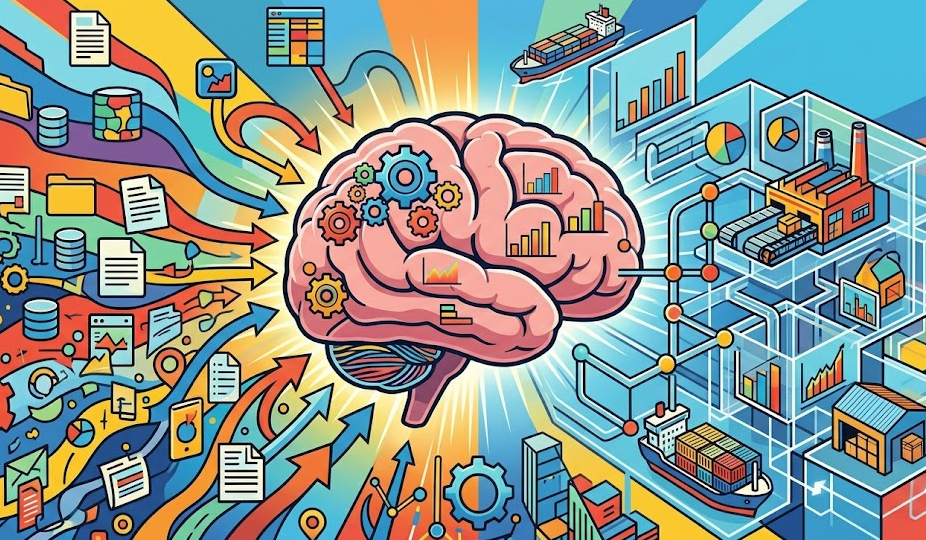
Connect your operational data to the Celonis platform. Use its process mining capabilities to automatically discover, model, and analyze actual process flows. Generate dashboards that show real-time process variants, bottlenecks, and deviations. This visual context is the core of the digital twin – without it, AI decisions lack operational grounding.
Step 3: Deploy Ikigai’s Decision Intelligence for Predictive Insights
Now integrate Ikigai Labs’ decision-intelligence features. These tools use machine learning to predict outcomes, recommend actions, and simulate scenarios. Connect them to the Celonis process model. For example, predict the probability of a payment delay based on current workflow stage. Ikigai adds the “intelligence” layer – turning historical process data into forward-looking insights.
Step 4: Build the Context Model (Digital Twin) Using Celonis Tools
Celonis’ new context model acts as a real-time digital twin of your business operations. Use the platform to define business objects (e.g., customer orders, invoices) and their relationships. Import the process models from Step 2 and augment them with Ikigai’s predictions. Configure live data connections so the twin updates continuously. This model provides operational context for any AI query – e.g., “What is the current risk in the supply chain?”

Step 5: Connect Your Enterprise AI Models to the Context Model
With the digital twin in place, integrate your existing AI models (e.g., chatbots, recommendation engines, anomaly detection) to the Celonis context model via APIs. The models can now access real-time operational context – for example, a customer service AI can see the exact status of a customer’s order and escalate proactively. Test the integration with sample queries to ensure context is correctly injected.
Step 6: Iterate, Monitor, and Optimize
Once live, monitor the digital twin’s accuracy and the AI’s decision quality. Use A/B testing to compare context-aware vs. non-context-AI performance. Continuously feed new event data to refine models. Engage operations teams to validate insights. Celonis and Ikigai tools include process conformance checking and automated improvements – leverage them to close the loop.
Tips for Success
- Start small – Pilot with a single critical process (e.g., order fulfillment) before expanding.
- Ensure data freshness – Real-time twins depend on low-latency data ingestion; set up streaming pipelines.
- Align AI with business goals – Context models should answer specific operational questions, not just generate generic insights.
- Invest in change management – Teams need training to trust AI recommendations grounded in real process data.
- Combine process mining with decision intelligence – Use Celonis to see what happened, Ikigai to predict what will happen, and the twin to act on both.
- Document your data lineage – Knowing where every data point came from builds confidence in AI outputs.
By following these steps, your enterprise can transform static operational data into a living digital twin that provides the context AI needs to make smarter, safer decisions. The Celonis-Ikigai integration makes this achievable today.
Related Articles
- Canonical Begins Modernizing Launchpad After Years of Neglect
- GitHub Overhauls Status Page with New Severity Levels and Per-Service Uptime Metrics
- How to Successfully Scale AI Voice Agents from Pilot to Production
- How to Build a Community That Powers the Next Generation of AI
- Windows 11 Gets Smarter, Faster, and Less Distracting: What You Need to Know
- Swift 6.3 Unleashes Unified Build System: Cross-Platform Development Gets a Major Upgrade
- Bridging the Gap: How Designers Can Make Accessibility Second Nature
- Kubernetes v1.36 DRA: What's New in Dynamic Resource Allocation?