10 Astonishing Facts About the Extreme Evolution of Bird Eyes
Birds possess some of the most advanced visual systems in the animal kingdom, shaped by millions of years of evolutionary pressure for flight survival and prey detection. Their eyes have been pushed to extremes—from unparalleled sharpness to seeing colors invisible to humans. Here are ten remarkable facts that reveal how bird vision evolved into a biological marvel.
1. The Exceptional Visual Acuity of Birds
Birds have the highest visual acuity of any vertebrate, often exceeding human capability by several times. Raptors like eagles can spot small prey from over a mile away, thanks to a dense concentration of photoreceptor cells in their retinas. This extreme resolution allows them to detect fine details in motion, essential for hunting. Unlike humans, birds have a specialized structure called the fovea (often multiple foveae) that acts like a built-in telephoto lens. Their eyes are also large relative to head size, maximizing light capture and image clarity. Evolution has optimized every aspect of the avian eye for sharp, long-distance vision, making it one of nature's most precise optical instruments.
2. Tetrachromatic Color Vision: Seeing Beyond Our Spectrum
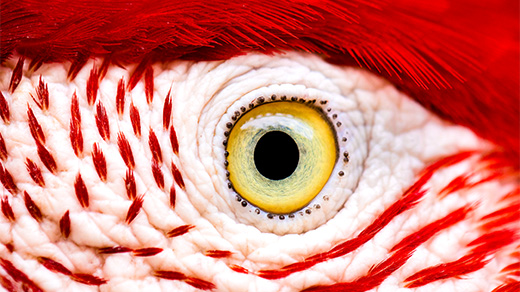
While humans are trichromatic (three types of cone cells), most birds are tetrachromatic, possessing four types of cone cells. This allows them to perceive a broader range of colors, including ultraviolet light. Birds have a specialized oil droplet in each cone that filters specific wavelengths, enhancing color discrimination and contrast. For example, many songbirds use UV patterns on feathers for mate selection that are invisible to predators. This adaptation likely evolved to improve foraging (finding ripe fruits with UV reflections) and social communication. Tetrachromacy gives birds a richer, more detailed visual world than humans can imagine—a true evolutionary extreme.
3. Ultraviolet Vision: A Hidden Dimension
Many bird species can see ultraviolet (UV) light, a portion of the spectrum invisible to humans. This ability stems from special photoreceptor cells sensitive to UV wavelengths. In some birds, like pigeons and passerines, the fourth cone type directly detects UV. UV vision serves critical roles: it helps birds locate food (some berries and seeds have UV-reflective coatings), navigate using UV patterns in the sky, and communicate through plumage markings. For instance, female blue tits prefer males with brighter UV-reflective chest feathers. The evolutionary pressure to exploit this hidden channel has driven the development of highly specialized retinal molecules, pushing bird eyes beyond mammalian limits.
4. A High Refresh Rate: The Fast Flicker Fusion
Birds have an exceptionally high flicker fusion frequency—the rate at which a flickering light appears continuous. While humans perceive about 60 flashes per second as steady, many birds can detect up to 100-120 flashes per second. This rapid visual processing is crucial for flight, allowing birds to react instantaneously to obstacles and prey in fast-moving environments. Hummingbirds, with their quick wing beats and aerial maneuvers, have some of the highest fusion rates. This adaptation also helps in avoiding predators and capturing insects in midair. Evolution has tuned the nervous system and photoreceptor response time to match the speed of avian life, making bird vision incredibly responsive.
5. The Built-in Sunglasses: Nictitating Membrane and Oil Droplets
Birds possess a third eyelid called the nictitating membrane that acts as a protective, transparent shield. It helps keep the eye moist and clean during high-speed flight or diving, while also reducing glare. Additionally, the oil droplets in their cone cells not only filter light but also protect against UV damage and enhance color contrast. These adaptations are evolutionary tweaks to handle bright sunlight at high altitudes. For example, birds that hunt over water or snow use the membrane as natural sunglasses. This combination of mechanical and chemical protection allows birds to maintain clear vision in extreme lighting conditions.
6. Dual Foveae: Two Points of Focus
Some birds, especially raptors and swallows, have two foveae (central pits for sharp vision) in each eye—one for forward binocular vision and another for lateral monocular vision. This configuration provides a wide field of view with exceptional depth perception in the center. The dual foveae allow birds to track prey directly ahead while simultaneously monitoring the periphery for threats. In contrast, humans have only one fovea per eye. This evolutionary duplication maximizes visual information without compromising resolution. It is a prime example of how bird eyes have been optimized for both hunting and survival, offering a 360-degree awareness unmatched in the animal kingdom.
7. Extremely Large Eyes Relative to Body Size
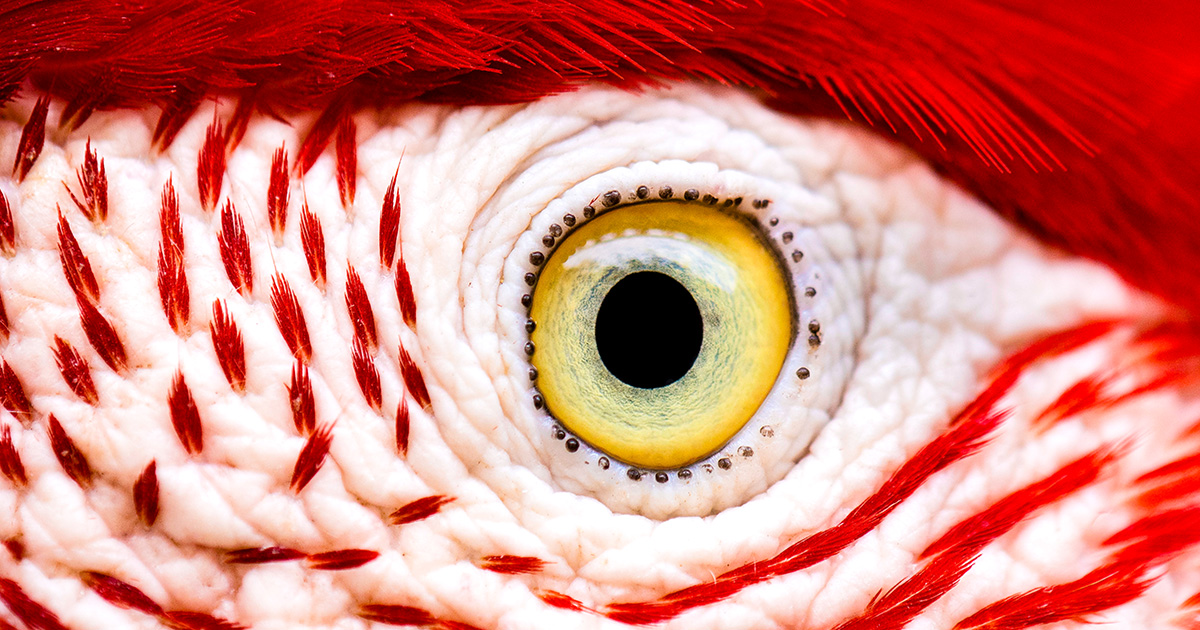
Birds have the largest eyes relative to their body size among terrestrial vertebrates. The eye of an ostrich is bigger than its brain and measures up to 5 cm in diameter—larger than a human eye! This large size allows for a bigger lens and more photoreceptors, enhancing light sensitivity and image detail. Nocturnal birds like owls have especially large eyes to capture more light in dim conditions. However, a large eye has a trade-off: it reduces eye movement, so many birds must turn their heads to change focus. Evolution has balanced size with mobility, resulting in eyes that are massive yet functional for flight. This adaptation is key to their visual superiority.
8. Specialized Retinal Structure for Low Light
Nocturnal birds have retinas dominated by rod cells (highly sensitive to low light) and a reflective layer called the tapetum lucidum behind the retina, which enhances light capture by reflecting it back through photoreceptors. This gives them exceptional night vision—owls can see with light levels 100 times dimmer than what humans need. Diurnal birds, on the other hand, have more cone cells for color. But some species, like the oilbird, have evolved a mix of rods and cones for crepuscular activity. The bird eye's ability to adapt to different light environments through retinal specializations shows the evolutionary flexibility that has allowed birds to occupy diverse ecological niches.
9. Rapid Accommodation: Instant Focus Change
Birds can change focus from near to far extremely quickly—faster than humans—thanks to a powerful ciliary muscle that deforms the lens. This is essential for birds that need to switch between scanning the horizon and inspecting nearby objects, like a gull spotting a fish while soaring. Some birds can even control the shape of the cornea through specialized muscles, allowing for rapid accommodation. Hummingbirds, for instance, can adjust focus while hovering inches from a flower. This rapid refocusing ability evolved to meet the demands of flight and foraging, giving birds an edge in dynamic environments.
10. Polarized Light Sensitivity for Navigation
Many birds can detect the polarization pattern of sunlight in the sky, even when it's cloudy, using specialized photoreceptor arrangements in their retinas. This ability helps them navigate during migration. The rods and cones are oriented in a way that they respond to the sky's polarization angle, providing a celestial compass. Experiments with homing pigeons and migratory songbirds show that disrupting polarization cues impairs navigation. This adaptation is an extreme example of sensory integration, where the eye functions not just for imaging but also as a navigational tool. Evolution has turned the bird eye into a multi-purpose instrument for survival on a global scale.
The bird eye represents millions of years of fine-tuning under the relentless pressures of aerial life, predation, and migration. From UV sensitivity to dual foveae, these adaptations showcase nature's ingenuity in pushing an organ to its absolute limits. Understanding these extremes not only deepens our appreciation for birds but also inspires technological advances in optics and imaging.
Related Articles
- How to Extract Actionable Insights from the 34th Technology Radar
- New Apple Watch Series 12 and watchOS 27: Key Rumors and Expected Features
- Under-Display Face Unlock: The Next Big Thing for Android Phones
- Why Type Construction and Cycle Detection
- Design Exclusion Crisis: Good Intentions, Bad Outcomes – Expert Proposes Fix
- Building Your Local AI Workspace: A Complete Guide to Perplexity's Mac-Native Personal Computer Platform
- macOS 27: What’s New in the UI Refinement and How It Fixes Tahoe Issues
- Safari Technology Preview 243: Enhanced Accessibility, Animations, and CSS Improvements