Fedora AI Desktop Initiative Derailed After Council Members Withdraw Support
Fedora AI Desktop Initiative Blocked
What was expected to be a swift approval for Fedora’s AI developer platform has collapsed after two council members retracted their votes, citing community outrage and unresolved legal and technical issues.
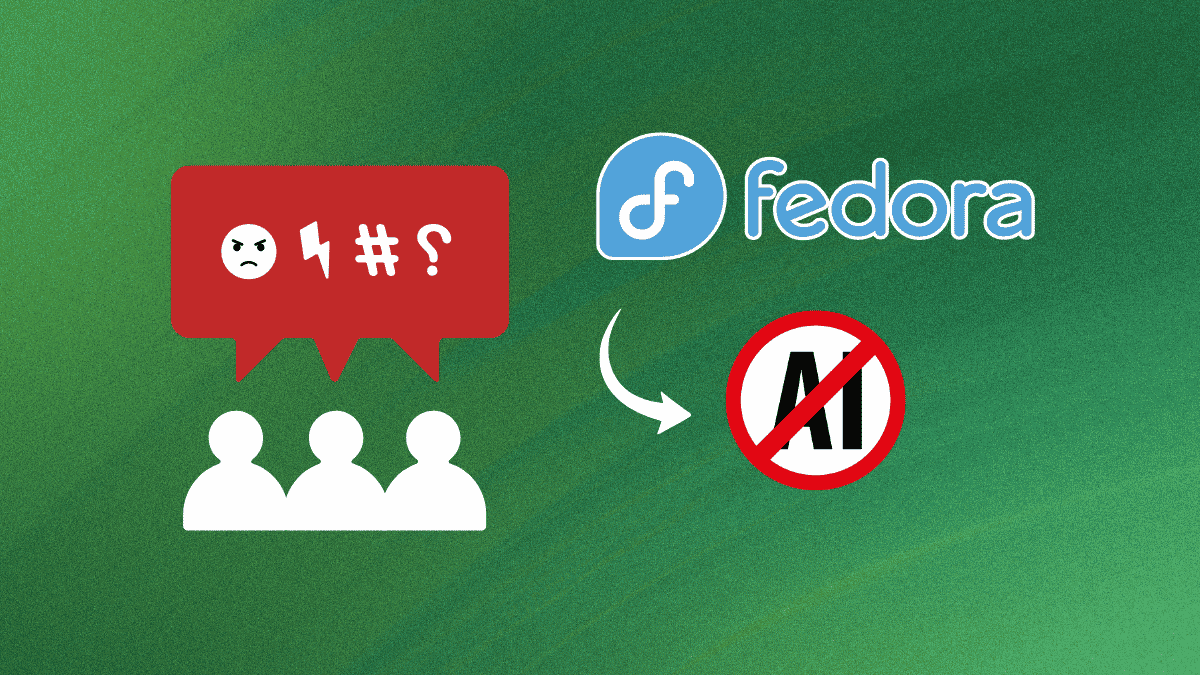
The initiative, proposed by Red Hat engineer Gordon Messmer, aimed to deliver an official Fedora Atomic Desktop with accelerated AI and machine learning support. It was unanimously approved during the May 6 council meeting, with a lazy consensus window open until May 8 for absent members.
Council Members Reverse Course
Justin Wheeler (Jflory7) was the first to change his vote to -1. He described the LTS kernel component as a “massive structural shift” that had not been cleared with relevant legal and engineering teams. He also noted that feedback from kernel subject-matter experts was ignored and that new technical complexities—particularly around the Nova driver for NVIDIA GPUs—required proper vetting.
“This proposal needed far more scrutiny before being fast-tracked,” Wheeler said in the council ticket. “The legal and engineering implications are substantial.”
Miro Hrončok (churchyard) also withdrew his earlier approval, admitting he initially believed the proposal was “purely additive” and uncontroversial. “The community response made me realize I was mistaken,” Hrončok stated. “As an elected representative, I need to reflect on major changes like this before signing off.”
Background
The Fedora AI Developer Desktop Initiative was designed to create an official platform for AI and machine learning workloads on Fedora. It focused on delivering Atomic Desktop capabilities, hardware enablement, and developer tools, all while building a community around AI on Fedora.
Red Hat engineer Gordon Messmer spearheaded the proposal, which initially seemed routine. However, the council’s swift approval and the subsequent community backlash caught many off guard.
Community Erupts
Over 180 replies flooded the proposal’s discussion thread, with prominent Fedora contributors raising alarm. Hans de Goede from the packaging team criticized the emphasis on CUDA support, arguing it runs counter to Fedora’s foundational commitment to free software. “Open alternatives like AMD’s ROCm and Intel’s oneAPI should be the focus, not proprietary CUDA,” de Goede said.

Tim Flink questioned whether the initiative was merely a mechanism to get CUDA onto a Fedora-adjacent system. Neal Gompa echoed similar concerns, noting that Fedora has historically used its stance against proprietary software to push vendors toward open solutions. “This proposal would undermine that effort,” Gompa warned.
What This Means
The initiative is now listed as blocked in the council ticket, with a new escalation deadline of May 22. Gordon Messmer has indicated a revised draft is coming, but the path forward remains unclear.
This reversal signals deep divisions within Fedora over its identity and direction. The community’s resistance to proprietary software—particularly CUDA and NVIDIA drivers—reflects a broader tension between advancing AI development and adhering to free software principles.
The communication gap highlighted by Fabio Valentini of FESCo—who only learned of the vote by accident—also exposes procedural weaknesses. Future proposals may require more transparent processes and broader consultation before reaching a vote.
For now, Fedora’s AI ambitions are on hold, awaiting a revised proposal that addresses community concerns. The outcome will likely shape how Fedora navigates the intersection of AI and open-source ideals.
Related Articles
- FreeCAD 1.1 Tutorial Launches: Step-by-Step Guide for Beginners Aimed at Best Practices
- Gradle 9 Boosts Build Times with Parallel JUnit 5 Testing Support
- The Self-Clocking Revolution: 8 Things You Need to Know About Manchester Code
- Breaking: Purple Team Dysfunction Exposed — Manual Operations Leave Networks Vulnerable
- Balancing People and Craft: A Shared Leadership Model for Design Teams
- Mastering Agentic Data Science with Marimo Pair: A Step-by-Step Guide
- Navigating the Coursera-Udemy Merger: A Step-by-Step Guide for Learners
- Cloud-Based AI Demystified: Your Guide to Text, Image, and Audio Services