How to Identify and Acquire Shovel-Ready Battery Storage Projects: A Developer's Guide
Overview
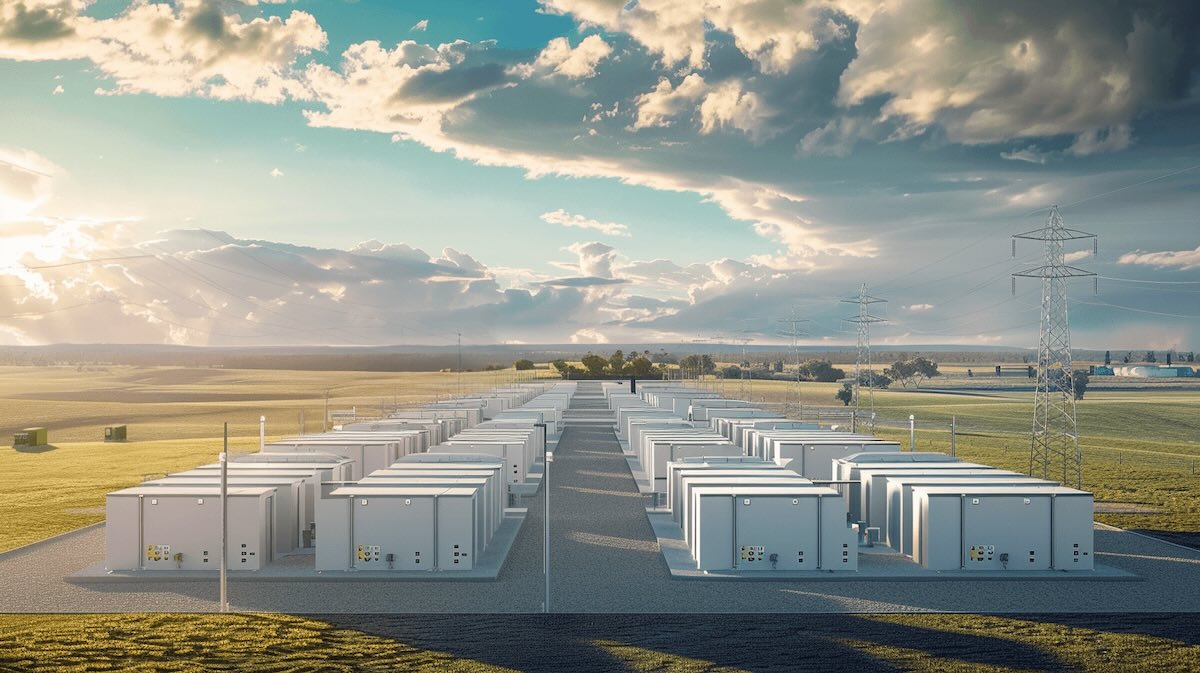
In the rapidly expanding energy storage market, shovel-ready battery projects are prime assets. A recent acquisition by a Melbourne-based developer highlights the value of strategically located, grid-connected storage—in this case, on a state border. This tutorial walks you through the process of evaluating and acquiring such a project, using due diligence, financial modeling, and permitting checks. You'll learn how to spot opportunities, assess readiness, and execute a successful acquisition.
Prerequisites
Knowledge & Resources
- Basic understanding of utility-scale battery energy storage systems (BESS)
- Familiarity with electricity markets and grid interconnection (e.g., NEM in Australia)
- Access to GIS mapping tools or site selection software
- Spreadsheet for financial modeling (NPV, IRR)
- Legal and regulatory checklists for project acquisition
Step-by-Step Instructions
1. Scouting Strategic Locations
The target project sits on a state border, offering arbitrage between two regulatory regimes and access to multiple transmission corridors. To replicate this:
- Identify regions with high renewable penetration and transmission congestion.
- Use GIS to overlay existing substations, land zonings, and population centers.
- Prioritize sites near interconnectors or border zones (like the Victoria-NSW border in Australia).
- Engage with local network service providers for constraint data.
2. Assessing Shovel-Readiness
A "shovel-ready" project has completed most pre-construction steps. Check for:
- Approved environmental impact assessment
- Signed land lease or option agreement
- Grid connection offer (e.g., connection application accepted or conditional approval)
- Preliminary engineering and design (single-line diagrams, site layout)
- Equipment reservations or supply agreements (transformers, batteries)
Example due diligence checklist (excerpt):
Checklist Item               Status
EIA submitted               ✔
Grid connection AIP          ✔
Land lease 20-year term     ✔
Battery supply MOU          Pending
3. Project Valuation and Financing
Use discounted cash flow (DCF) to estimate value. Assumptions:
- Capacity: 100 MW / 200 MWh (2-hour)
- Revenue: 70% from FCAS, 30% from energy arbitrage
- Construction cost: $350/kWh, financed 70%/30% debt/equity
- WACC: 8%, useful life 20 years
Sample DCF table:
Year  Net CF ($m)   PV Factor   PV ($m)
1     -35.0         0.9259      -32.41
2     5.2           0.8573       4.46
...    ...          ...          ...
20     5.2           0.2145       1.12
NPV = $12.3m, IRR = 11.5%
4. Acquisition Due Diligence
Verify the seller's claims. Key areas:
- Technical: Confirm grid capacity, site geotech, noise constraints.
- Legal: Check title, encumbrances, termination clauses in leases.
- Regulatory: Ensure all state and local permits transferable.
- Commercial: Audit any existing PPA or off-take agreements.
5. Permitting and Timeline Management
Even shovel-ready projects need final permits. Common steps:
- Submit building permit applications as soon as possible.
- Schedule for local council compliance (e.g., noise, traffic).
- Initiate grid connection testing and commissioning plan.
- Set milestone dates for financial close, notice to proceed, and COD.
Common Mistakes
- Overlooking network constraints: A strategic location can be worthless if the local substation is weak. Always get a system impact study.
- Ignoring community opposition: Even with permits, neighbor complaints can delay construction. Budget for engagement.
- Underestimating construction costs: Shovel-ready does not mean cheap. Secure fixed-price EPC contracts early.
- Missing curtailment risks: Batteries on borders may face overlapping congestion. Model five-year historical curtailment data.
Summary
Acquiring a shovel-ready battery project—like the one on the state border—requires strategic site selection, rigorous due diligence, and careful financial modeling. By following these steps, you can replicate the success of Melbourne-based developers and build a valuable energy storage portfolio. Start with location, verify readiness, then close the deal.
Related Articles
- How to Get the Most Out of Your INIU SnapGo Air 25W Magnetic Power Bank
- How to Analyze the Global LNG Price Divergence Triggered by the Strait of Hormuz Closure
- Inside China's Revolutionary Underwater AI Data Center: Offshore Wind and Seawater Cooling in Action
- Tesla's Windshield Wipers: Why They're Not So Automatic After All
- Used EV Market Heats Up: Urgent Choices for Buyers Amid Depreciation Waves
- Lithium Batteries Failing to Meet AI Data Centers' Unique Power Demands, Expert Warns
- Tesla Semi Hits the Road: High-Volume Production Finally Begins
- Tesla’s Semi Charging Solutions: Basecharger and Megacharger Explained